AI is becoming part of the architecture workflow, from early design ideas and visualization to documentation, specifications, compliance, and project management. Architects use it to handle repetitive work and explore design options faster, while firms also test its value in business and sustainability tasks.
At the same time, questions around design quality, originality, professional judgment, skills, and employment remain.
This statistical roundup brings together the key data on how architects use AI, where it adds value, and where its limits are becoming clear. For verification, we have added the data sources at the end.
Key AI in architecture statistics at a glance:
- 74% of architecture practices use AI, rising to 83% among larger firms.
- Only 17% of architects say AI improves their designs, despite 52% expecting it to boost innovation.
- 73% of AI users report higher productivity, while only 2% report lower productivity.
- 30% report major time savings in documentation, compared with 17% in modeling.
- 71% of AI using architects use ChatGPT, far ahead of Gemini at 18%.
- 57% of practices report positive AI ROI, while 41% see the investment as cost neutral.
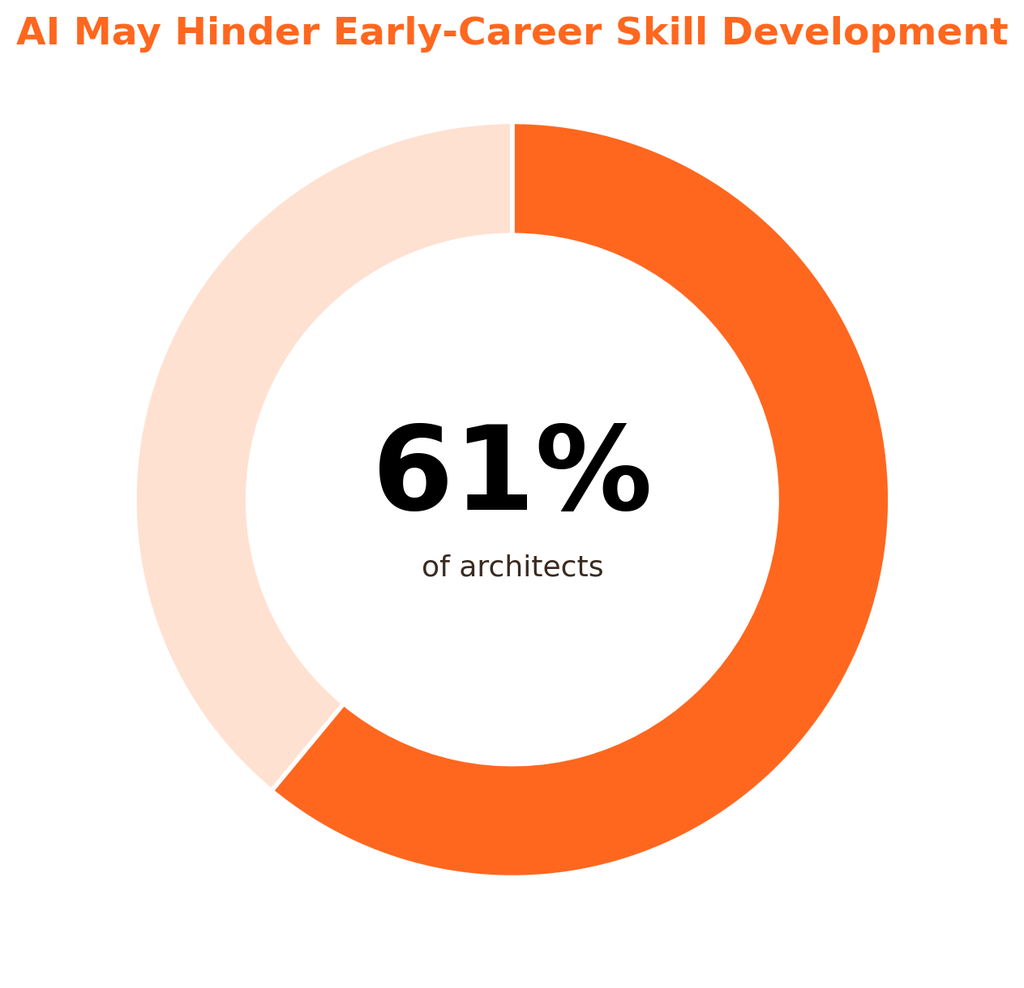
- 61% fear AI could weaken early career training by automating routine tasks.
- 76% say AI increases design imitation risks, while 95% reject AI replacing professional judgment.
- 65% worry AI energy use could hurt sustainability, compared with 38% who see it as helpful.
- AI could automate up to 49% of construction tasks, with 67% expecting higher productivity.
AI Adoption in Architecture
AI adoption varies by region and firm size. The figures highlight how widely architects use AI, where adoption is strongest, and why some practices have not yet seen enough value to adopt it.
- 74% of surveyed architectural practices use AI for at least some projects, showing that AI has moved beyond early experimentation and into regular architectural work.
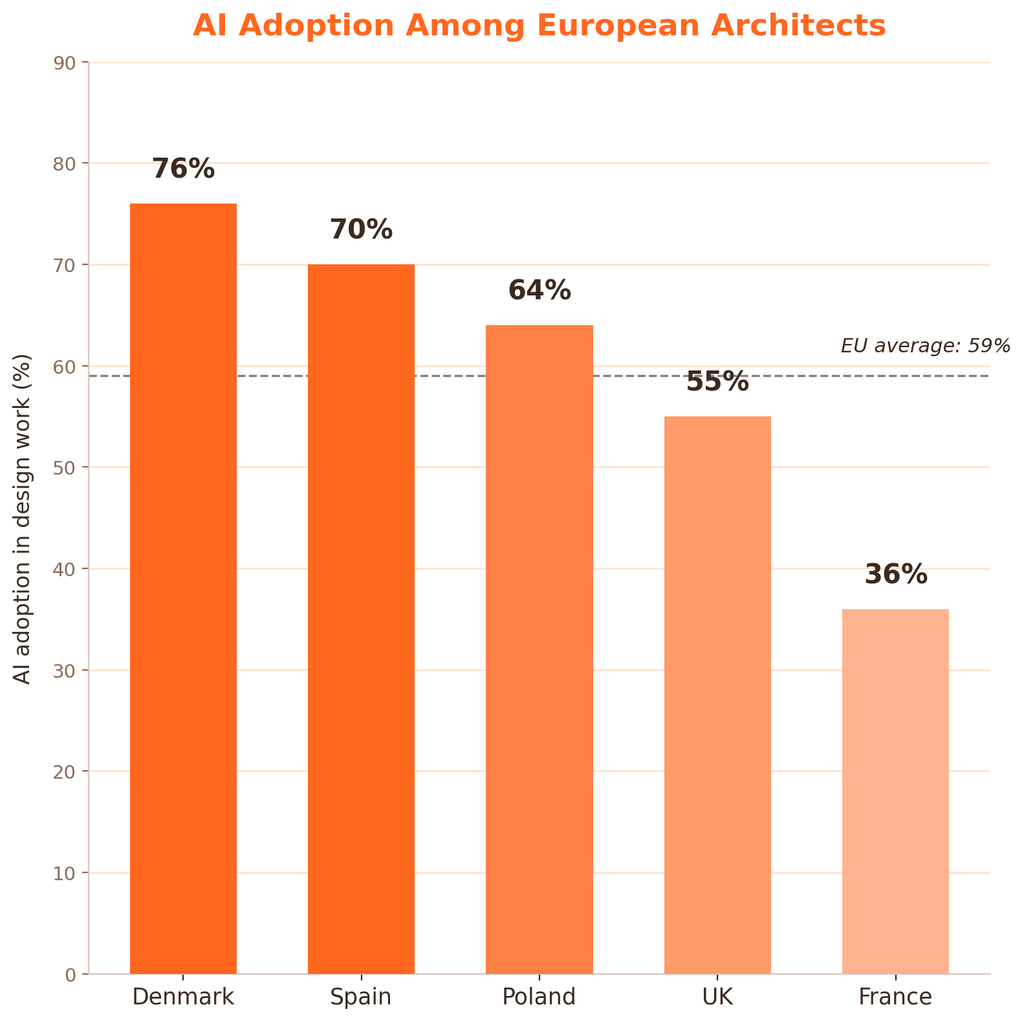
- 59% of European architects use AI in their design work, with adoption highest in Denmark (76%), followed by Spain (70%), Poland (64%), the UK (55%), and France (36%).
- 83% of practices with 50 or more staff use AI, compared with 64% of medium practices and 48% of small practices, showing that larger firms are further ahead in adoption.
- 41% of architects do not use AI, and among these non-users, 44% say they see no clear benefit from AI, making lack of clear value the main reason for non-adoption.
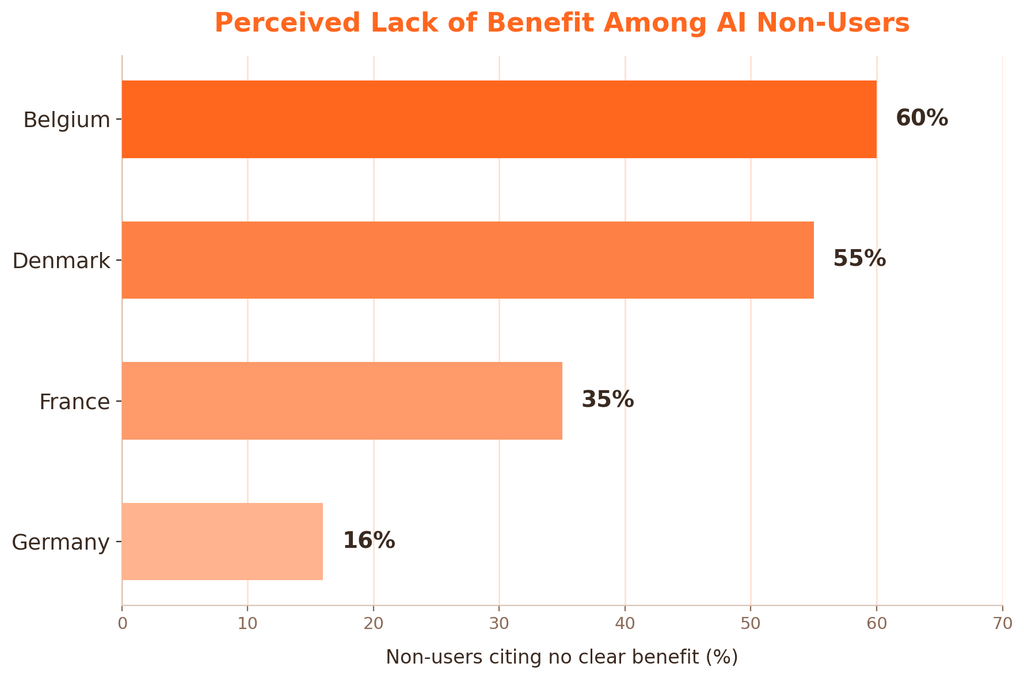
- The share of non-users who see no clear benefit varies by country, reaching 60% in Belgium and 55% in Denmark, compared with 35% in France and 16% in Germany.
- 42% of US architects, engineers, and planners use AI tools daily, compared with about one third globally.
- Only 8% of architecture firms have implemented AI solutions, while another 20% are working on implementation.
AI Tools and Applications Used by Architects
Architects are applying AI across design and daily practice. Popular uses range from visualization and generative design to specifications, compliance, documentation, project management, and product research.
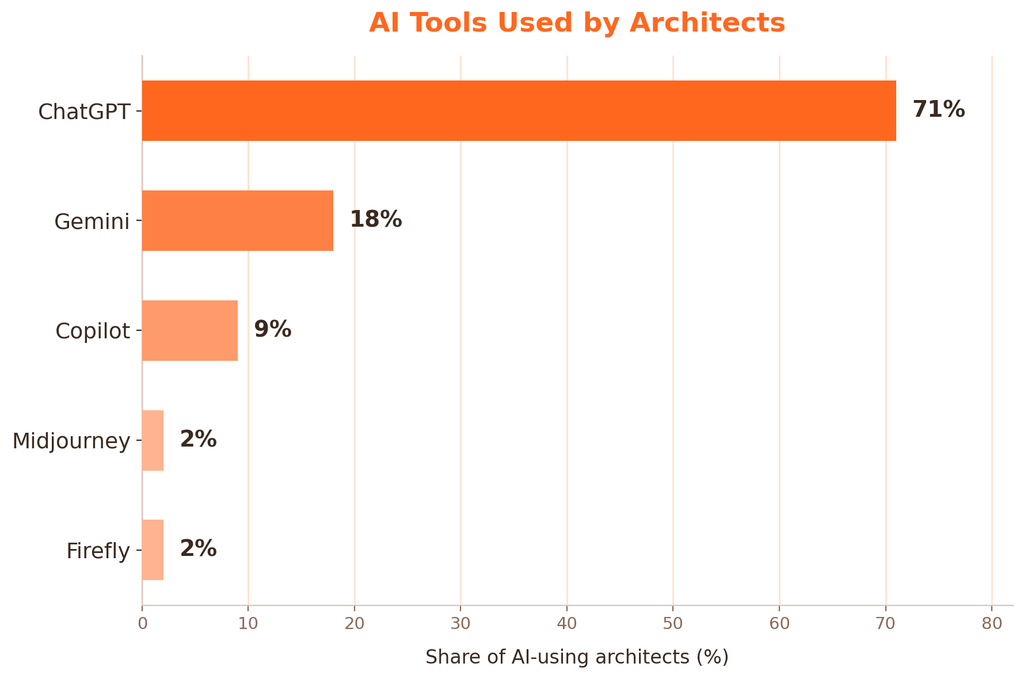
- 71% of AI-using architects use ChatGPT, followed by Gemini at 18%, Copilot at 9%, and Midjourney and Firefly at 2% each.
- 70% of AI-using practices use AI for early design visualizations, making it the most common architectural design application.
- 58% use AI for specification writing, 52% for standards and regulatory compliance, 46% for generative design, and 45% for model generation.
- 40% use AI for parametric design and building performance simulation, while 35% use it for environmental impact modeling.
- 89% of AI-using practices use AI for report writing, followed by bid creation (58%), client management (41%), cost information and modeling (35%), and project scheduling (33%).
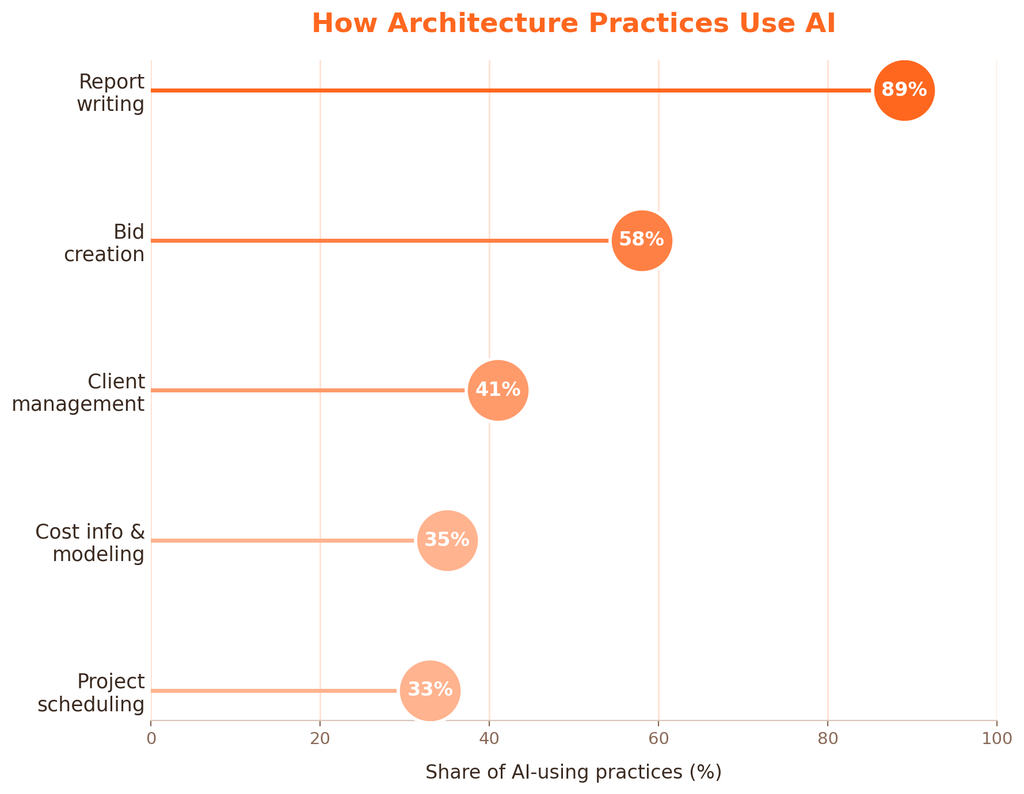
- 30% use AI for project resource management, 29% for contract selection, 29% for contract management, 33% for fee calculation, and 28% for project cost management.
- 40% of practices use AI for compliance checking, 32% for practice management, 24% for specification writing or technical design, and 18% for selecting or analyzing construction products and materials.
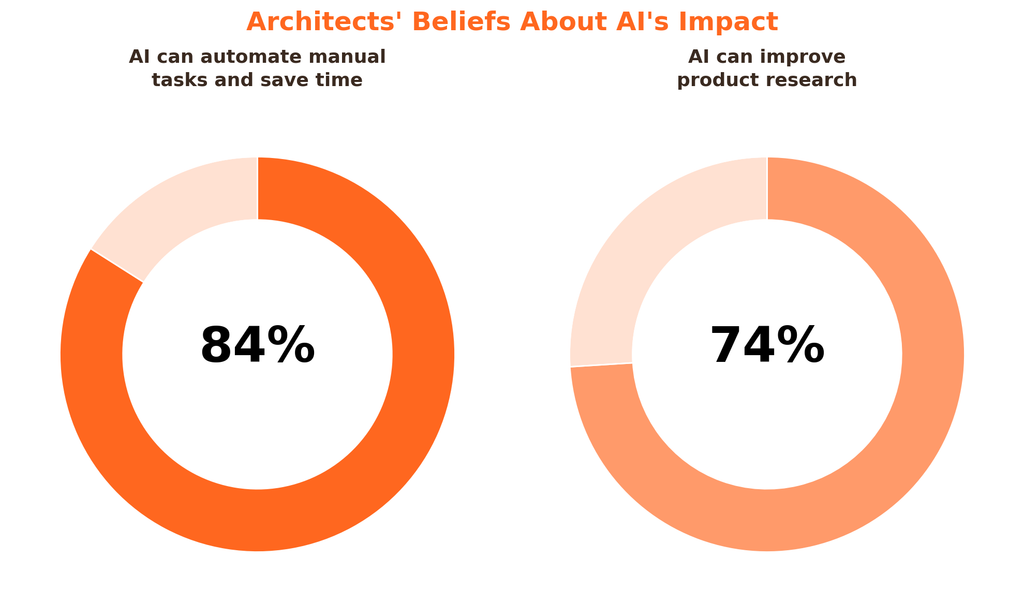
- 84% of architects believe AI can automate manual tasks and save time, while 74% believe AI can improve product research.
AI Productivity and Business Impact in Architecture
AI is already affecting productivity and business operations within architectural practices. The numbers cover time savings, creative work, investment returns, new services, project fees, and the accuracy of AI-assisted outputs.
- 73% of architects using AI say it has improved their practice’s productivity, while 25% report no change and only 2% report lower productivity.
- 17% of architects report significant time savings in modeling and 47% report small time savings, while documentation produces stronger gains, with 30% reporting significant savings and 33% reporting small savings.
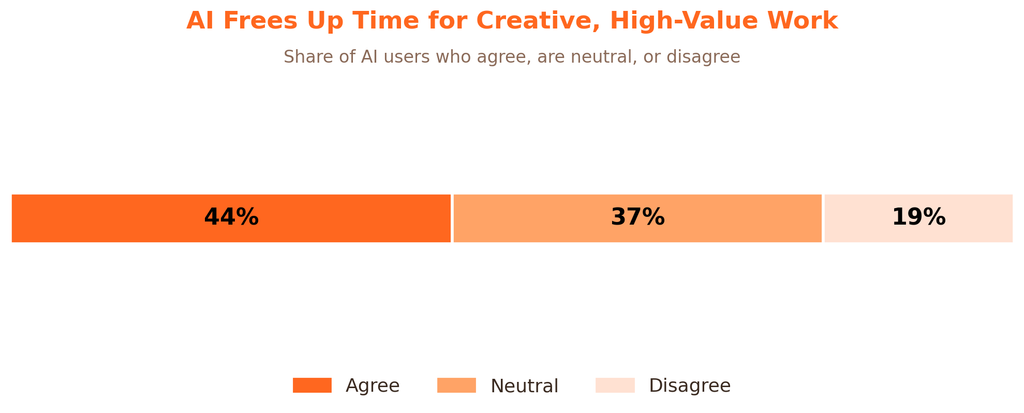
- 44% of AI users say AI allows them to spend more time on creative, high-value work, while 19% disagree and 37% remain neutral.
- 57% of practices that assessed their AI investment report a positive ROI, while 41% consider the investment cost neutral and only 2% report a negative return.
- 20% of AI users say AI has allowed their practice to carry out new types of work, while 42% disagree and 38% remain neutral.
- 27% of practices expect AI to allow them to carry out new types of work in the future.
- Only 7% of AI users say AI has allowed their practice to increase project fees, while 58% disagree. Only 13% expect AI to increase project fees in the future.
- Only 34% of AI users say AI has improved efficiency in architectural design, while 34% disagree and 33% remain neutral.
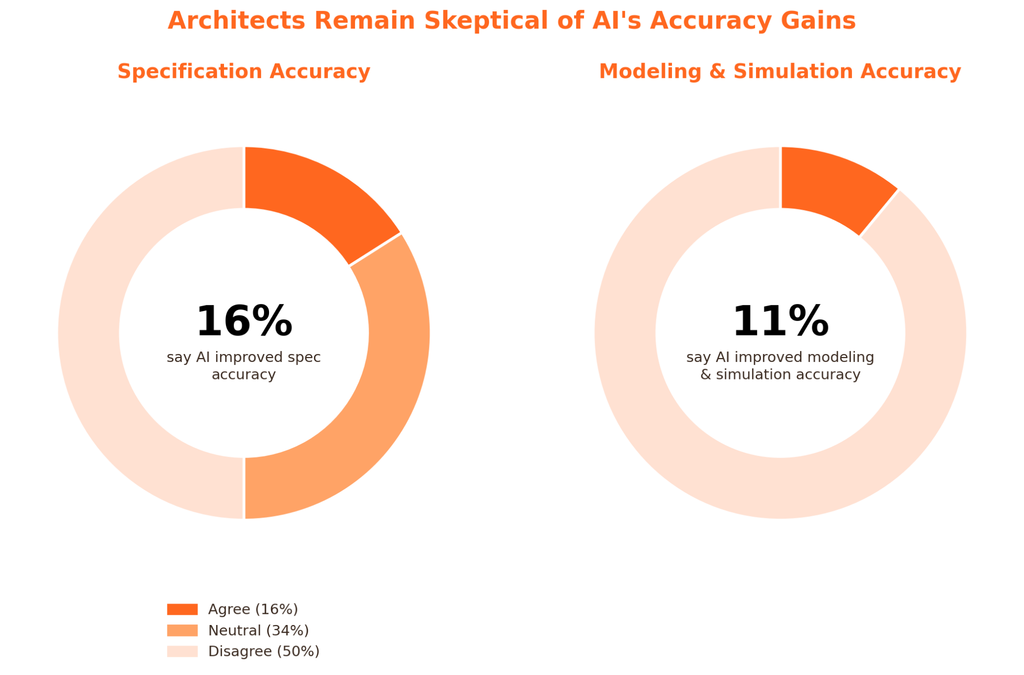
- Only 16% say AI has improved specification accuracy, while 50% disagree. Just 11% say AI has improved the accuracy of architectural modeling and simulations.
AI Investment, Training, and Skills
Architecture firms are increasing their focus on AI skills and infrastructure. Investment plans, training needs, research activity, AI knowledge levels, and internal policies show how practices are preparing for wider adoption.
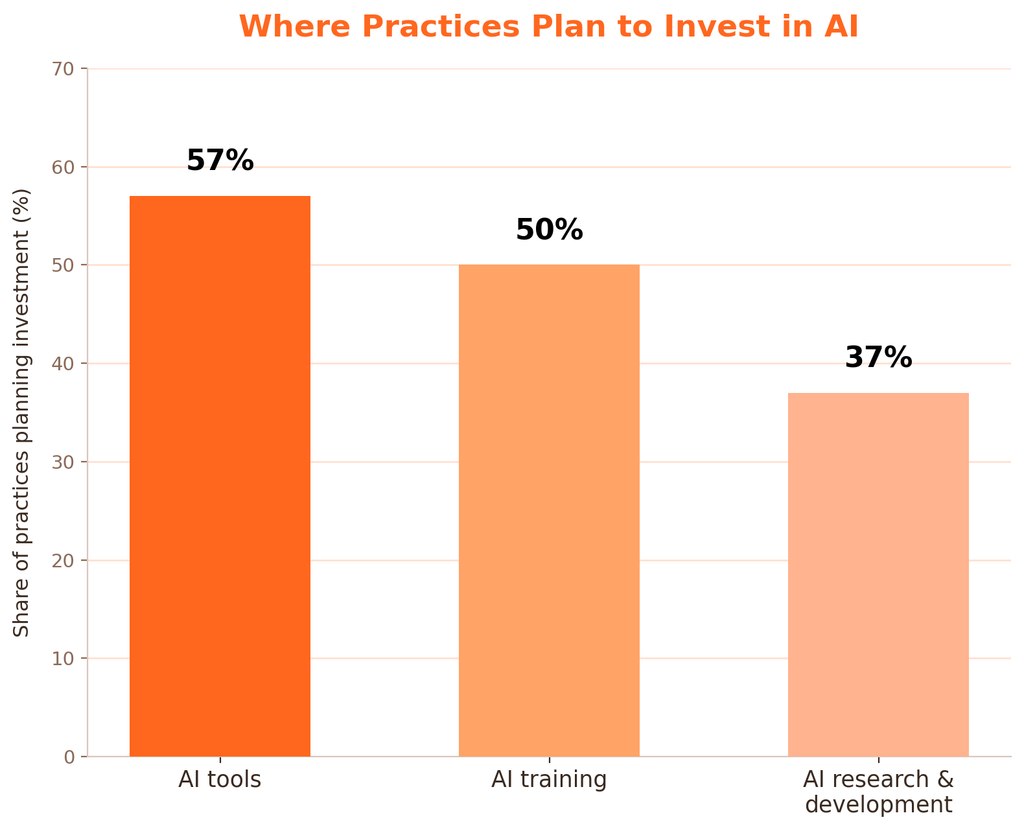
- 57% of practices expect to invest in AI tools, 50% in AI training, and 37% in AI research and development.
- In 2025, 12% of survey respondents reported advanced AI knowledge, 34% practical knowledge, and 45% basic knowledge; 7% had no knowledge, and only 1% considered themselves a recognized authority.
- Only 15% of practices had an AI policy in 2025, while 18% had invested in AI research and development.
- Only 17% of AI users say AI has been integrated into environmental sustainability analysis, while 25% say it has been integrated into bid creation, project management, or scheduling.
AI, Creativity, and Design Quality
Architects remain divided over AI’s effect on creative work. Current views on design quality sit alongside expectations for greater design innovation, creativity, and changes to architectural education.
- 77% of respondents believe AI can never replace human creativity, while only 30% believe AI enhances creativity and 41% disagree.
- Only 17% believe their designs are better because of AI, while 42% disagree and 41% remain neutral.
- 52% expect AI to positively affect design innovation, and 45% expect it to positively affect design creativity.
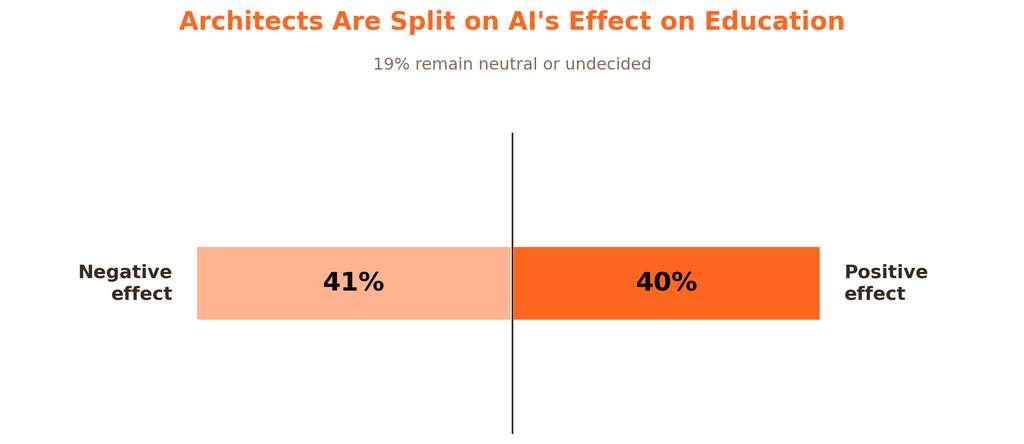
- Views on AI’s effect on architectural education are divided, with 40% expecting a positive effect and 41% expecting a negative effect.
AI Risks and Professional Concerns in Architecture
Concerns extend beyond inaccurate AI outputs. Architects are also questioning originality, professional responsibility, ethics, security, transparency, and how automation could affect the skills early-career professionals develop.
- 76% of professionals believe AI increases the risk of design imitation
- 55% believe AI could allow people without sufficient professional qualifications to design buildings
- 61% believe AI could make it harder for early career professionals to gain the skills they need, as AI may automate routine tasks that traditionally helped young architects develop practical skills.
- Nearly 90% of architectural professionals are concerned about AI inaccuracies, along with concerns about unintended consequences, security, authenticity, and transparency.
- 95% disagree that AI could replace professional judgment, while 94% disagree that human creativity will no longer be needed for building design.
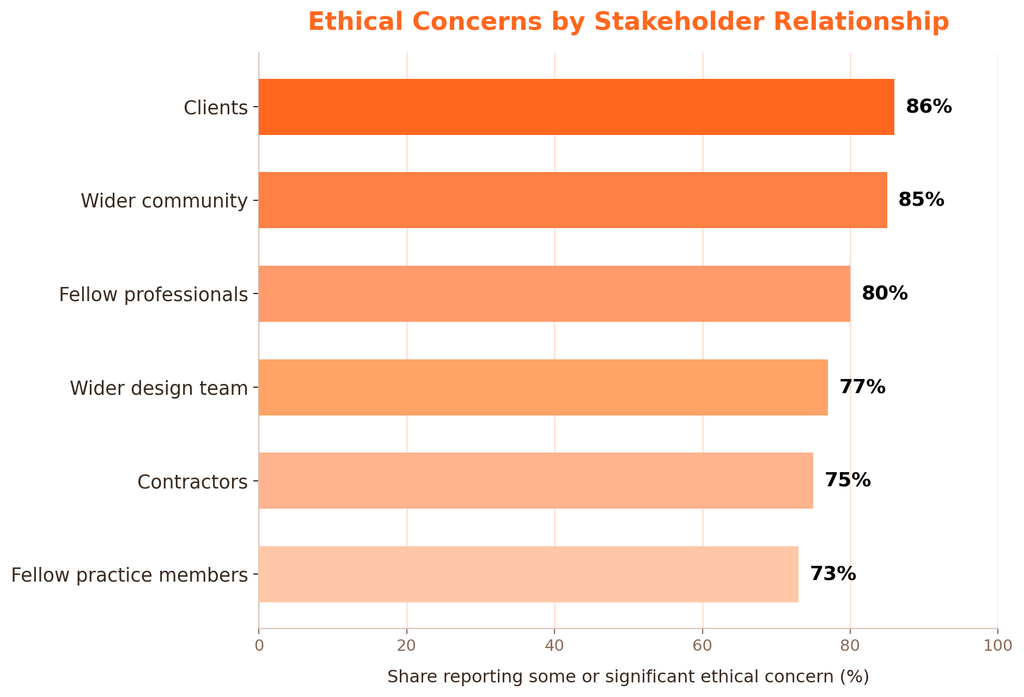
- 86% of respondents see some or significant ethical concerns about their responsibilities toward clients, followed by 85% toward the wider community, 80% toward fellow professionals, 77% toward the wider design team, 75% toward contractors, and 73% toward fellow members of their practice.
AI’s Impact on Architecture Jobs and Fees
AI could reshape both employment and professional roles. Architects show concern about job opportunities and fees, while project managers also see potential for technology to increase professional value.
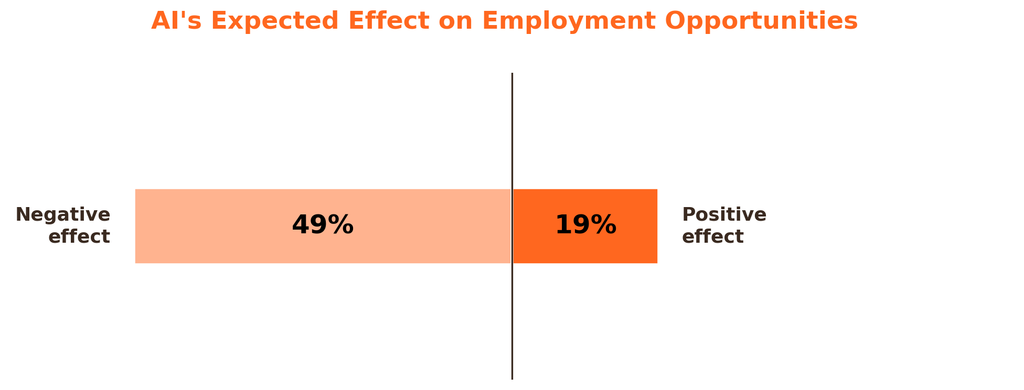
- 49% of architects expect AI to negatively affect employment opportunities, while only 19% expect a positive effect.
- 44% of project managers are concerned about AI’s impact on their own roles, while 48% feel overwhelmed by how quickly technology is changing the surveying profession.
- 69% of project managers believe AI will help surveyors deliver greater value in the future, showing that concerns about job changes exist alongside optimism about professional value.
- Only 3% of respondents said AI had led to staff reductions in their practice.
AI and Sustainability in Architecture
AI presents both opportunities and environmental concerns. Architects see potential for environmental analysis and decarbonization, but many also question whether AI’s energy consumption could undermine sustainability goals.
- 65% of architects believe the energy AI consumes could set back global sustainability goals, while 38% believe AI can help the built environment meet those goals.
- 25% of US built environment professionals see potential for AI to help decarbonize the sector.
AI Infrastructure and Digital Readiness
Digital infrastructure can influence how easily firms adopt AI. Cloud and SaaS use, project delivery performance, and workforce turnover provide context for the readiness of architecture and engineering practices.
- 58% of architecture and engineering firms report that at least 60% of their infrastructure and systems are cloud- or SaaS based, providing a stronger digital foundation for cloud-based AI tools.

- Nearly 60% of architecture and engineering firms deliver projects on or ahead of schedule, providing a benchmark for measuring potential AI improvements in project delivery.
- Architecture and engineering firms have a 13.8% employee turnover rate, which can increase pressure on firms to improve productivity with existing teams.
Generative AI in Architecture
Generative AI is changing how architects explore early concepts. Regional market growth and rapid creation of floor plans and 3D models show how these tools can shorten the path from a written idea to a visual concept.
- North America was the largest regional market for generative AI in architecture in 2025, while Asia Pacific is expected to be the fastest-growing region during the forecast period.
- Generative AI can produce 3D models and floor plans from text prompts in about 30 seconds, showing how quickly architects can turn written ideas into early design concepts.
AI Market and Adoption in Construction
The construction industry provides a wider view of AI’s commercial potential. Market growth, automation, organizational readiness, investment plans, and workforce skills point to the scale of change across the built environment.
- The global AI in construction market was valued at $4.86 billion in 2025 and is projected to reach $35.53 billion by 2034, growing at a 24.8% CAGR from 2026 to 2034.
- AI could automate up to 49% of construction tasks.
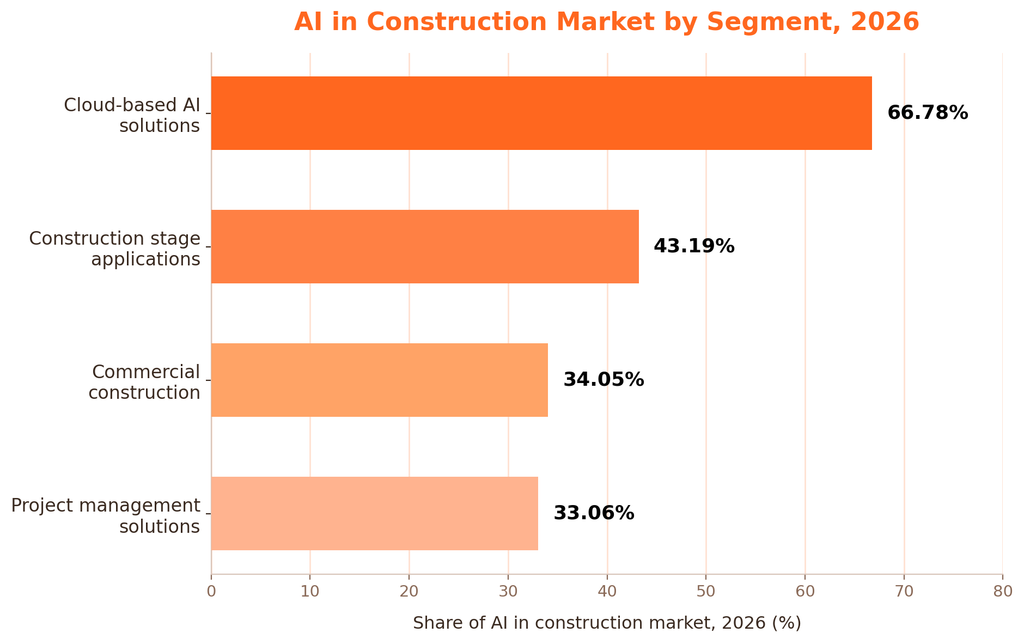
- Project management solutions are expected to account for 33.06% of the AI in construction market in 2026, while cloud-based AI solutions are expected to account for 66.78%, construction stage applications for 43.19%, and commercial construction for 34.05%.
- 74% of construction organizations have limited or no preparation for AI adoption, with 45% still exploring potential uses and 29% having no AI capability or plans.
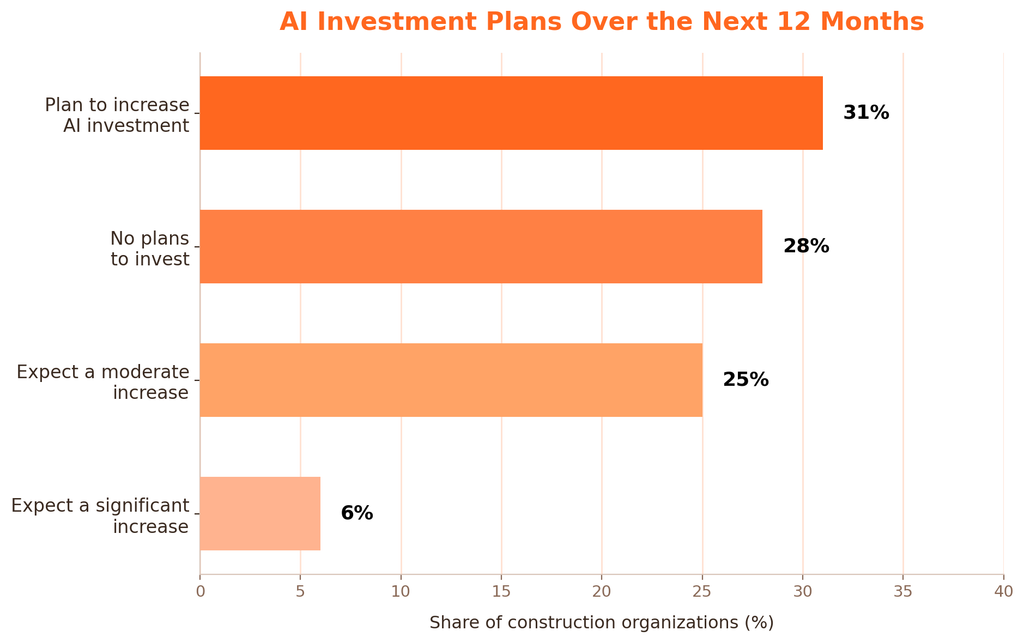
- 31% of construction organizations plan to increase AI investment over the next 12 months, while 28% have no plans to invest, 25% expect a moderate increase, and 6% expect a significant increase.
- 46% of construction professionals identify a lack of skilled personnel as the biggest barrier to AI adoption.
AI Applications and Productivity in Construction
Construction professionals expect AI to influence several operational areas, especially design optioneering and project scheduling. Other opportunities include improvements in resources, risk, cost, quality, safety, sustainability, and productivity.
- 40% of construction professionals expect AI to have its biggest impact on design optioneering, followed by project scheduling and progress monitoring at 36%.
- 30% believe AI could significantly improve resource optimization and contract or project document review, while 29% see significant potential for risk management.
- 25% believe AI could significantly improve cost management, while 22% see potential in quality management and 21% in safety and sustainability.
- 67% of construction industry respondents expect AI to increase productivity, while only 10% expect a negative effect.
- 24% of businesses believe better use of data can improve on-site safety.
Final Words
The data shows that AI is becoming a useful part of architectural work, but it works best alongside strong technical and design skills. As AI takes on more repetitive tasks, architects need practical skills to use these tools effectively and turn ideas into buildable projects.
This is where structured BIM training can add value. ASDAV’s architecture courses cover Revit, BIM workflows, construction documentation, coordination, parametric logic, and emerging AI applications in BIM. It also includes live training, real-world case studies, and practical assignments.
ASDAV also offers architecture courses and masterclasses that focus on practical design skills and real-world workflows for students and professionals.
💡 Further Resources
- 75+ Smart Home Statistics Covering Trends and Usage
- 5 Most Recommended BIM Courses for This Year’s Batch
- Can International Architecture Graduates Work in the UK?
FAQ
How is AI being used in architecture?
AI is mainly used for early design visualization, specification writing, compliance checking, generative design, model generation, documentation, and project management. 70% of AI using architectural practices use AI for early design visualization, while 58% use it for specification writing, 52% for standards and regulatory compliance, and 46% for generative design.
How many architects are using AI?
74% of surveyed architectural practices use AI for at least some projects. Adoption is higher among larger firms, with 83% of practices with 50 or more staff using AI compared with 48% of small practices.
What AI tools do architects use?
ChatGPT is the most widely used AI tool among architects who use AI, with 71% using it. Gemini is used by 18%, Copilot by 9%, and Midjourney and Firefly by 2% each.
How does AI benefit architects?
73% of architects using AI say it has improved their practice’s productivity. AI also saves time, automates manual tasks, supports product research, and gives architects more time for creative work.
Can AI improve architectural design?
Only 17% of architects say their designs are better because of AI. However, expectations for the future are more positive, with 52% expecting AI to improve design innovation and 45% expecting it to improve design creativity.
Can AI replace architects?
AI is not currently viewed as a replacement for professional architectural judgment, with 95% disagreeing that AI could replace professional judgment. Similarly, 94% disagree that human creativity will no longer be needed for building design.
Will AI replace architectural jobs?
49% of architects expect AI to negatively affect employment opportunities, compared with 19% who expect a positive effect. However, only 3% of respondents said AI had led to staff reductions in their practice.
What are the risks of AI in architecture?
76% of respondents believe AI increases the risk of design imitation. Other concerns include AI inaccuracies, professional accountability, security, authenticity, transparency, and the risk that people without sufficient qualifications could use AI to design buildings.
Can AI help with sustainable architecture?
AI can support sustainable architecture through environmental impact modeling and sustainability analysis, but architects remain concerned about its energy use. 65% believe the energy AI consumes could set back global sustainability goals, while 38% believe AI can help the built environment meet those goals.
What is the future of AI in architecture?
AI adoption in architecture is expected to grow as firms increase spending on AI tools, training, and research. 57% of practices expect to invest in AI tools, 50% plan to invest in AI training, and 37% expect to invest in AI research and development.
Data Sources
- https://www.usp-research.com/insights/blogs/most-architects-now-use-ai-heres-what-theyre-actually-doing-with-it/
- https://www.riba.org/media/3f2bcutw/riba-ai-report-2026-aug.pdf
- https://www.riba.org/media/uqmlay5m/riba-ai-report-2025-final.pdf
- https://www.rics.org/news-insights/artificial-intelligence-in-construction-report
- https://www.fortunebusinessinsights.com/ai-in-construction-market-109848
- https://www.aia.org/about-aia/press/new-research-explores-perceptions-and-opportunities-artificial-intelligence
- https://info.deltek.com/Clarity-AE
- https://www.arup.com/en-us/news/architects-and-engineers-relying-daily-on-ai-to-design-cities-and-infrastructure-global-survey-reveals/
- https://www.researchandmarkets.com/reports/6226564/generative-ai-in-architecture-market-report
- https://www.globenewswire.com/de/news-release/2024/12/18/2999226/0/en/Artificial-Intelligence-AI-in-Construction-Global-Report-2024-Market-to-Reach-12-1-Billion-by-2030-How-BIM-Building-Information-Modeling-Integration-Expands-Scope.html

Jasmine Ahluwalia is a Licensed Architect, Interior designer, Global Vastu consultant and the founder of ASDAV.
She is a graduate of Scuola Master F.lli Pesenti, Politecnico di Milano, and brings strong global exposure through academic learning and professional design projects. Her background combines architecture, interior design, and applied design education.
Before founding ASDAV, Jasmine worked as an assistant professor at Amity School of Architecture and Planning, Amity University Noida. Her research covers sustainable architecture, urban heat island reduction, and circular economy practices in construction. Her work has been published in Scopus indexed and peer reviewed journals as well. She also has strong international on-site experience from countries like Canada, Mauritius, UK, and many more.
Through ASDAV, she has trained more than 500 students across 25 cities. The ASDAV platform has 12+ instructors from IIT, SPA, CEPT and NID, and has delivered over 200 live learning sessions. Her mission is to bridge the gap between design education and real industry expectations, to deliver real growth for her students.
She designs spaces for a living, but her favourite project is designing careers.