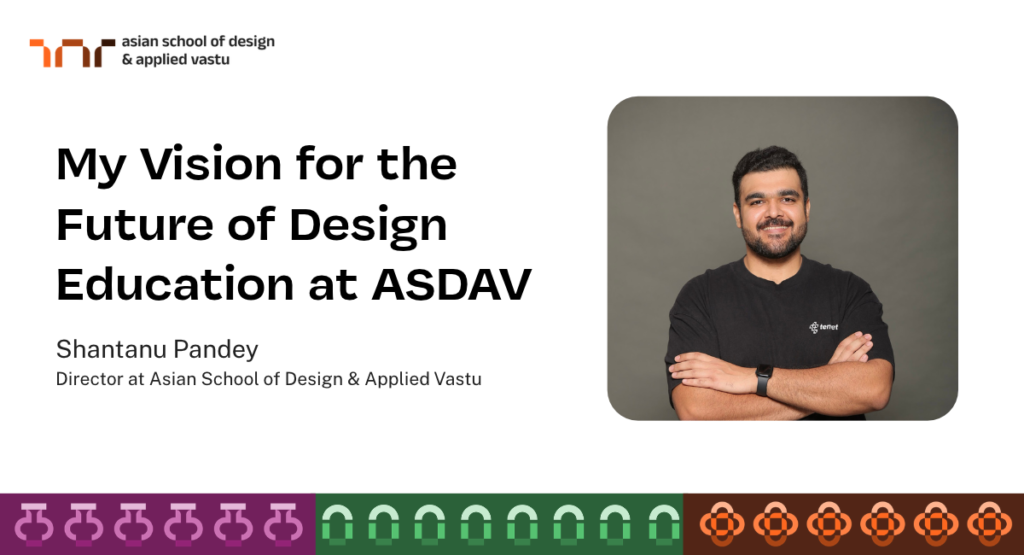
Design education is moving toward live, practical training in small batches, and that belief is why I joined ASDAV as Director. My work here covers which programmes ASDAV offers, how learners outside India can join them, and the employer partnerships now being built.
If you’re choosing where to learn interior design, Applied Vastu, or Revit and BIM, I wrote this for you. You’ll see where design education is heading and what my vision for ASDAV means for your own training.
Where I See Design Education Today
Today I see design education moving closer to the work it prepares you for. The push comes from employers and from the tools themselves, and recent reports show how far it has gone.
- Skills now change in the middle of a career. The World Economic Forum’s Future of Jobs Report 2025 says workers can expect 39% of their existing skill sets to be transformed or become outdated by 2030. I expect people to keep retraining while they work.
- Firms can’t find job-ready people, and many can’t train them in-house. In Autodesk’s 2025 State of Design & Make report, 61% say new employees with the right technical skills are difficult to find. In the same report, 48% say their organisations lack the resources to design internal training programmes.
- Training is turning toward projects and portfolios. The India Skills Report 2026 says it in one line: “For educators, curricula move toward projects, portfolios, and verifiable competencies.”
- AI is in every conversation, but practice is early. In 2025 the American Institute of Architects found that only 6 percent of the profession regularly use AI for their jobs.
For you, this changes what a good course looks like. It has to fit around a working life. It also has to teach the skills a firm would otherwise have to teach you itself, and leave you with projects you can show.
My Vision for Design Education at ASDAV
My vision for ASDAV is practical design training that a working person in any country can join live and put to use. ASDAV was created to close the gap between design education and what the industry expects, and I want that gap closed for far more people. Ar. Jasmine Ahluwalia founded ASDAV in 2024 and leads academics and curriculum.
ASDAV should be the first school a professional checks
I want ASDAV to be the place a professional anywhere checks first before training in applied Vastu, interior design, or Revit and BIM. I like that the list is short. Three disciplines, each taught in depth.
Interior design covers homes and commercial spaces, from layouts and furniture planning to materials and lighting. Revit and BIM covers modelling, drawings and coordination, and the course was shaped so interior specialists can take it too.
Applied Vastu belongs in this vision as applied traditional knowledge. ASDAV teaches it as design logic, through layout analysis and zoning, without astrology. I want you to be able to explain a Vastu decision to a client the way you’d explain a lighting plan.
Design training should serve people who already work
I want design training to fit people who already have a job or a household to run. ASDAV’s learners include architecture and interior design students. They also include working professionals, career switchers, homemakers, real estate professionals, contractors and builders.
People in the building trades keep adding the skill next door. A carpenter picks up electrical work, an electrician learns project management, and a project manager learns the software. I want ASDAV to make that next step easy to take.
So the door stays open. ASDAV’s courses have no strict academic entry requirements, and they suit beginners. If you only need one skill, there are short masterclasses built around a single skill.
Live and small stays the same as ASDAV grows
Live classes in small batches are the part of ASDAV I won’t trade for growth. Courses are instructor-led, and the 12+ instructors are practising professionals from IIT, SPA, CEPT and NID. Since 2024, ASDAV has run 200+ live sessions for 500+ learners across 25 cities.
Small matters because someone has to actually watch your work. That’s how you find out which mistakes are fatal and which ones are just a Tuesday.
Learners in the UAE, the UK, the USA and Canada join the same live sessions as learners in India. Sessions run on Indian Standard Time, Gulf Standard Time, And Pacific Standard Time so I’d check that against your own day before you enrol.
Revit and BIM skills are largely the same from one country to the next. That is part of why I’m confident one live class can serve a learner in the UAE and a learner in India equally well.
Courses should be shaped by what the job asks for
A course should be shaped by what a firm will ask you to do in the job. I run Tenet, a design and growth agency, so I see what firms need from new designers. A list of software names on a CV tells me very little.
At ASDAV, AutoCAD, SketchUp, Lumion, Enscape and Revit are taught through project work. That means working drawings, briefs based on actual client requirements, and site-based case studies.
Employer partnerships are the next step, and I’m building them now. My aim is for firms to look at learner work and say where it falls short, so their input reaches the courses.
Fundamentals come before AI
My advice is to learn the drawing and modelling tools properly before you lean on AI. The AIA’s 6 percent figure shows most practices are still early, so the fundamentals remain the daily work.
AI helps once you know what good looks like. A working drawing still has to be right whether a person or a tool drew it, and a contractor on site will find the mistake either way.
ASDAV’s founder has written a fuller answer in Will AI Replace Interior Designers & Architects?.
What I Want Students to Take Away
I’d judge any design course by what you can do and show at the end of it. At ASDAV, a learner gets:
- Live, instructor-led classes in small batches, taught by practising instructors.
- Time in the software your course covers, spent on project work.
- Vastu you can explain to a client as design logic.
- Career guidance and portfolio support, with a short Portfolio Development masterclass if you want more help there. A useful portfolio shows your decisions too, including the version you threw away and why you threw it.
- A course completion certificate you can add to LinkedIn. ASDAV doesn’t offer degrees or diplomas.
ASDAV doesn’t promise jobs, and I won’t either.
I won’t make claims about other institutes. Ask any school you’re considering the same four questions, and ask ASDAV too:
- Who teaches, and do they still practise?
- How big is the batch?
- Are the classes live?
- What will you have built by the end?
A good school won’t mind the questions.
My part in your experience is the programme lineup. I’ll keep each programme clear about who it’s for and what you’ll do in it. I’m also working to bring employer input into the courses and to take the same live classes to more countries.
Conclusion
There are several good schools for design, and many learners trust them. Choose by your needs, your budget and your timeline.
On timeline, Applied Vastu runs for 6 weeks. Revit & BIM for Architects runs 12 weeks, and so do the Residential and Commercial Interior Design courses. The Professional Program in Interior Design runs 24 weeks.
ASDAV helps you build practical skill in interior design, applied Vastu, or Revit and BIM. It provides live classes in small batches, practising instructors, project work and a course completion certificate.
Start with the full list of ASDAV courses and masterclasses. Before you decide anything, I’d read the syllabus of the course you’re considering.

Shantanu Pandey is the Director at ASDAV, with over a decade of experience across design, growth marketing, and product management. He also leads Tenet, a global design and growth agency working with startups, SMEs, and Fortune 500 companies across markets.
At ASDAV, Shantanu focuses on shaping the institution’s global strategy and growth, with a strong emphasis on practical, industry-led design education. His experience working across design, technology, marketing, and product development helps ASDAV build learning experiences that prepare students for the evolving demands of the global design industry.